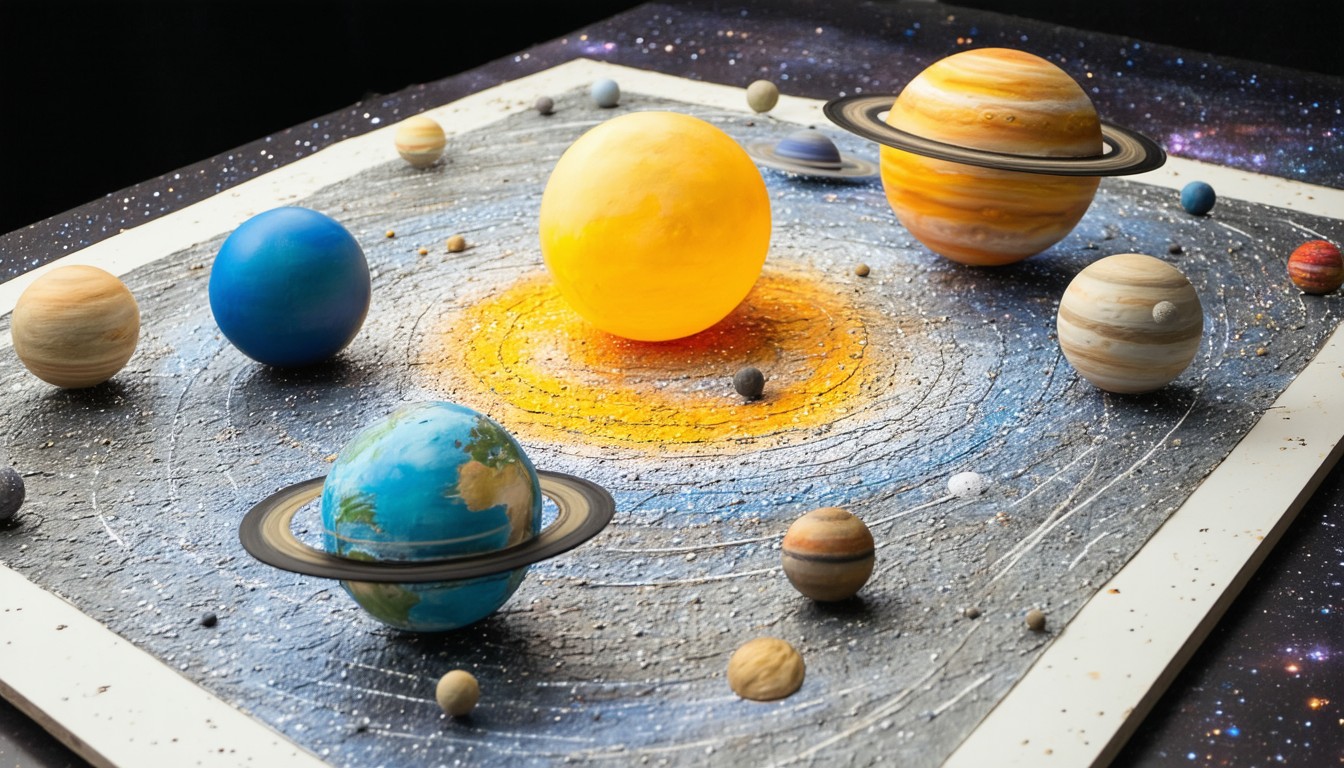
Few educational assignments ignite curiosity like a solar system project. From colorful dioramas of planets to digital models powered by augmented reality, these projects have become a rite of passage for students worldwide. They bridge art and science, inviting learners to explore the scale, structure, and mystery of our cosmic neighborhood—the solar system.
The rise of interdisciplinary learning has made solar system projects more than just a display of painted Styrofoam balls. They offer a hands-on opportunity for critical thinking, collaboration, and STEM skill-building. According to educational research, projects that blend creativity with scientific accuracy tend to foster deeper engagement and longer retention of material. Whether made with recycled materials, 3D printing, or code, a thoughtfully executed model can elevate understanding far beyond textbook diagrams.
Choosing the Right Solar System Project: Considerations and Formats
Selecting a solar system project involves balancing age-appropriate complexity, available resources, and educational goals. Teachers and parents can tailor the assignment to suit different learning styles and skill levels.
Popular Solar System Project Types
- Classic 3D Models: Often made with polystyrene balls, paints, and wire, these traditional representations are a staple in classrooms.
- Digital/VR Simulations: Interactive platforms (like NASA’s Eyes on the Solar System) allow students to explore planets in virtual or augmented reality.
- Poster and Infographic Presentations: Flat representations using data visualizations, planetary facts, and art.
- Edible Models: Creative use of candies or fruits to demonstrate relative planetary sizes and distances.
- Mechanical or Motorized Models (Orreries): Incorporating gears or circuits, these models demonstrate orbital mechanics.
“A well-constructed solar system project should challenge students to synthesize information, practice scientific modeling, and most importantly—develop a sense of wonder about our universe,” says Dr. Emily Torres, a science education specialist.
The choice of project should be guided by time constraints, student interest, and the desired learning outcomes—whether that’s memorizing planetary order or grappling with complex concepts like axial tilt or orbital resonance.
Creative Solar System Project Ideas for Different Grade Levels
Creativity is not constrained by grade level; even foundational projects can emphasize innovative thinking. Adapting project depth and scope ensures accessibility to learners of various ages.
Elementary School: Engaging Projects for Young Scientists
For younger students, hands-on materials and vibrant colors spark engagement. Some perennial favorites include:
- Foam Ball Model: Paint and assemble planets to scale, using thread or wire for rings.
- Paper Plate Orrery: Attach colored circles (planets) to a rotating base for a simple mechanical display.
- Edible Solar System: Use fruit, candies, or cookies to “taste” relative planetary sizes and distances.
These approaches prioritize tactile learning, helping students visualize the spatial relationships between celestial bodies.
Middle School: Going Beyond the Basics
At this level, solar system projects can integrate more data, scale modeling, and research. For example:
- Scale Model on School Grounds: Measure and mark planetary orbits across a playground or hallway, dramatically illustrating the vastness of space.
- Data-Driven Infographics: Research and present planetary composition, atmospheres, and unique features.
- Simple Robotic Orrery: With a small motor and basic circuitry, demonstrate planetary revolution around the Sun.
Middle schoolers can also explore planetary geology using clay models, simulating surface features like craters and volcanoes.
High School and Beyond: Advanced and Digital Models
Older students can undertake projects incorporating coding, physics, and advanced spatial reasoning:
- 3D-Printed Solar Systems: Use design software and printers to create accurate miniatures with detailed textures.
- Augmented Reality (AR) Apps: Develop or utilize AR tools where planetary data “appears” in the classroom via smartphone or tablet.
- Research-Based Presentations: Investigate planetary climate or the search for exoplanets, presenting findings through interactive maps or models.
High school-level projects may involve an analytical component—calculating orbital periods or modeling gravitational influences between planets and moons.
Building an Accurate and Visually Impactful Solar System Model
Pursuing both scientific precision and artistic flair presents unique challenges. Choices like scale, color, and material selection can make a dramatic difference in both appearance and educational value.
Tips for Scientific Accuracy
- Scale Matters: Choose a consistent scale for size and distance. Many students (and adults) are surprised by the vast gaps between planets; even the largest classrooms often cannot accommodate the actual distances.
- Reference Reliable Sources: Data from NASA, ESA, or peer-reviewed publications ensures the model is up to date.
- Highlight Essential Features: Include distinguishing characteristics such as Saturn’s rings or Jupiter’s Great Red Spot.
Materials and Construction Guidance
- Recycled Materials: Cardboard, bottle caps, and egg cartons foster sustainability and resourcefulness.
- Paints and Finishes: Acrylic or tempera paints resist fading and provide vivid colors; varnish adds durability.
- Mounting and Display: Mobile-style hangers, stable wooden bases, or wall-mounted displays can cater to different environments.
“Successful solar system projects are not about perfection, but about engaging students in authentic, inquiry-driven science,” emphasizes Dr. Linda Kim, leader of a STEM curriculum initiative.
Beyond construction, students can personalize projects with planetary “fact cards,” mission profiles, or comparisons to exoplanetary systems—connecting learning to the wider universe.
Inspiring Examples and Real-World Trends in Solar System Projects
Across the globe, classrooms and science museums showcase innovative solar system models. Notably, the Sweden Solar System—an enormous, country-spanning public artwork—visualizes celestial bodies to-scale using landmarks from Stockholm to the far north, demonstrating the power of large-scale, collaborative projects.
Tech-forward trends are also shaping learning. More schools are integrating coding platforms, AR visualization, and even 3D modeling software (such as Tinkercad or Blender) into their assignments, enabling more interactive and personalized experiences. These skills are invaluable as STEM careers continue to grow, making project-based learning in topics like the solar system more vital than ever.
Conclusion: Fostering Wonder Through Solar System Projects
A solar system project can be as simple as a paper collage or as complex as a coded simulation—what matters most is the journey of exploration it inspires. By blending creativity with scientific rigor, students not only deepen their knowledge of astronomy but also hone critical thinking and problem-solving abilities. In classrooms enriched by hands-on projects, the next generation of scientists and creators discover that learning can be as boundless as the universe itself.
FAQs
What materials are best for a solar system project?
Common materials include polystyrene balls, cardboard, recycled items, and various types of paints. For a sustainable approach, many students opt for reusable or biodegradable materials.
How can I ensure my solar system model is scientifically accurate?
Use sources like NASA’s planetary fact sheets to check sizes, distances, and colors. Keeping to one scale for planet sizes and another for distances often helps, since true scale is rarely feasible.
Are digital solar system projects allowed or encouraged?
Many teachers welcome digital models—such as interactive presentations or simple coding projects—especially as technology becomes integral to classrooms. Always check assignment guidelines.
What is the main educational value of making a solar system model?
These projects teach spatial reasoning, research, artistic skills, and scientific knowledge. They also encourage teamwork and curiosity about astronomy.
Can a solar system project be done as a group activity?
Absolutely. Collaborative projects foster teamwork and let students tackle more complex or larger-scale models, such as playground-sized layouts or deeply researched presentations.
How can I adapt a solar system project for students with different learning needs?
Consider hands-on materials, visual and audio resources, and options for digital or oral presentation. Differentiated instruction helps make the experience inclusive for all learners.